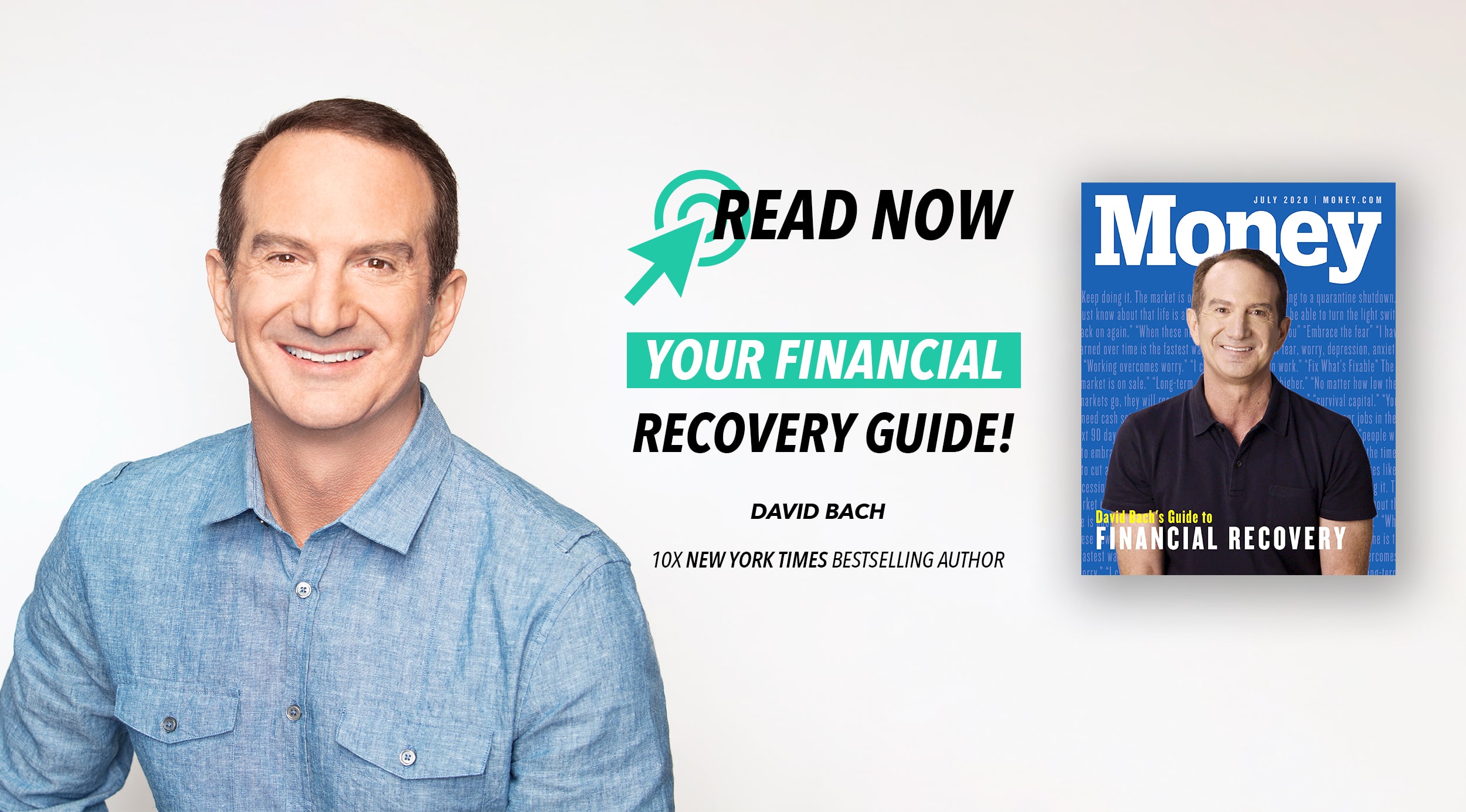

David Bach

9 Time New York Times Bestselling Author of The Automatic Millionaire offers financial advice

David's Newsletter & Bonus Audio Training: Subscribe Now

Main menu

Skip to primary content
Skip to secondary content
  • Blog Home
  • Newsletters
  • Videos
  • FinishRich.com
  • Sign Up For News Feed

Tag Archives: Money Market Account

One loss shouldn’t lead to another

Posted on August 1, 2012 by David Bach
14

Recently, a close friend said to me, “David, my mom is going through a divorce. Her house is for sale and she’s not sure if she should rent a place or buy a new home in this market. What do you think?”

As we sat on the beach, my friend Jennifer (not her real name) and I discussed her mom’s situation, how difficult the divorce process had been, and her worries about her mom’s financial future.

I listened carefully to Jennifer, and then shared with her some heartfelt advice and wisdom, having worked in the past with hundreds of clients in the same situation. What I told her might also be helpful to you (or a loved one) if you’re unsure of what to do with your money after a divorce or the death of a family member.

First, Do Nothing
There are often dozens of financial decisions to be made during a divorce or after a death. You might find yourself asking such questions as: Should I rent or buy? How should I invest the money (assuming there is any)? Should I hire a financial adviser? If so, who? How do I know I can trust them? Should I invest in stocks, bonds, or mutual funds? Should I start a business, or invest in one?

The questions can seem endless, and often lead to knee-jerk emotional decisions. My advice to Jennifer’s mom was to do nothing right away that involves significant financial decisions or commitments.

I went on to explain to Jennifer that making serious financial decisions in the first year after a divorce or death can lead to regret, and more important to financial mistakes that can last a lifetime. Instead, I said, her mom should give herself a solid year in order to clear her head.

Take a Year to Get Clear
Having worked before with divorced people, widows, and widowers, I can tell you from experience that both of these life-changing situations take a while to heal emotionally. It takes time to go through the feelings of losing someone you love either to death or divorce.

The best thing you can do the first year is deal with the denial, anger, pain, and confusion of the death or divorce. It can take months and often years to come to terms with what has happened, and only then can you finally reach a period where you can think straight.

Even the toughest people need to take time to grieve. And often, the tougher you are, the harder it can be and the longer it can take.

Find Your Money, and a Great Attorney
When you go through a divorce or the death of a loved one, the single most important thing you can do financially during the first year is to simply “find the money.”

Jennifer’s mom wasn’t officially divorced yet, and Jennifer was concerned that she wasn’t being treated fairly by her dad when it comes to finances. Jennifer told me, “My Mom thinks he’s hiding money, and she’s not sure what to do.”

“Tell your mom she needs to hire a professional,” I advised. “She needs to get her attorney to help her find someone who does forensic accounting to search for the money.” Forensic accountants spend their careers finding money that people and businesses try to hide.

When you’re starting the process of a divorce, you need to know how big the financial pie truly is before you split up — which is why finding all the money is so critical. If you’re dealing with a death, it’s equally critical to find all of the assets as soon as possible, as you may only have a few months to settle your estate depending on where you live.

Make Your Money Safe
Initially, put the money you come into after a divorce or death somewhere safe and simple. You shouldn’t tie it up in a long-term investment or anything risky.

My recommendation for Jennifer’s mom was to put the money she was to receive from the sale of the family home into a money market account. They’re liquid, safe, and often insured. You can withdraw your money without a penalty. It doesn’t get any safer and simpler than that — an excellent solution for the first year while you’re getting your head and heart together.

I hope my advice helps you or someone you love during a difficult period. Sometimes, the best thing you can do is listen when someone you love is hurting — but some financial advice never hurts, and can often really help.

Live Rich,
David Bach

Posted in Blog | Tagged david bach, Divorce, Estate, Money Market Account, personal finance | 14 Replies

Today.com – 6 Tips For Setting Up Emergency Accounts

Posted on April 23, 2012 by David Bach
3

In this week’s Today.com video I explain to a viewer why it’s a good idea to have separate accounts for emergencies, buying and repairing your cars, and other investment purposes.

Check out my 6 tips for setting up emergency accounts:

1)    KEEP YOUR EMERGENCY ACCOUNT SEPARATE FROM OTHER ACCOUNTS. This means you want to put your emergency cash cushion of at least three months’ of expenses into an account that is NOT your regular checking account, but one set up specifically for this purpose.  Once you set an account up I suggest you make your emergency fund automatic. That means every single time your paycheck is deposited, your checking account is set up to automatically sweep money into a separate savings account you’ve set up for your rainy-day fund.  I suggest you start by moving 5% of each paycheck to your emergency account until you reach the goal you set for yourself.

2)    DO NOT HAVE A CHECKING ACCOUNT OR ATM CARD ATTACHED TO THIS ACCOUNT. Why do I say this? If you don’t have an ATM card or a checking account attached to your money you will be more likely to leave the money alone, so you actually use it for what it’s meant for—an emergency. What’s a real emergency? It’s not just having to buy a new dress for that special party. Or finding an amazing set of wheels for your car at a once-in-a-lifetime price. A real emergency is something that threatens your survival, not just your desire to be comfortable. So unless your family is about to go hungry or be thrown out into the street, you shouldn’t be dipping into your emergency fund.

3)    SET UP SEPARATE ACCOUNTS FOR OTHER INVESTMENTS. If you are trying to save for a large purchase like a car or household appliances make sure you save for these in separate accounts, not your rainy-day fund.

4)    USE A MONEY MARKET ACCOUNT FOR SAVING YOUR MONEY. Once you’ve made the commitment to funding a rainy-day account, the next decision you have to make is where to park it. I used to emphasize the importance of finding a place that would give you a reasonable return on your money. But these days, I’d focus less on the kind of return you’re getting and more on making sure your emergency money is safe and accessible. 

A money market account is one of the simplest, most secure choices for someone who wants to put aside cash and earn a decent return. When you deposit in a money market, you’re actually buying shares in a mutual fund that invests in short-term government bonds and highly rated corporate bonds—the safest investments around.

5)    SEARCH FOR MONEY MARKET ACCOUNTS AT BANKRATE.COM. Today there are thousands of money market accounts out there, and the cost and quality vary widely. So just like you’d shop around for a car, shop around for a money market rate. Ask questions and don’t be afraid to play competitors against each other.

6)    CHOOSE A REPUTABLE BANK WITH FDIC INSURANCE ON THE ACCOUNT. If you find a bank with a rate that you’re interested in. Check to see if it displays the official sign of the Federal Deposit Insurance Corporation. As its name indicates, the job of the FDIC is to insure deposits—and thus allow banks to tell nervous customers that even if the bank fails, their money (or at least a good chunk of it) will be safe.  So make sure your money is safe by checking to make sure the bank is FDIC approved.

BONUS TIP: I didn’t mention this in the video but you can also let the Government help you save for a rainy day. The U.S. government has made it really easy to buy bonds online, and if you’re looking for a safe investment that’s guaranteed by the full faith and credit of the U.S. government, consider U.S. savings bonds. TreasuryDirect.gov is a terrific Web site that lets you quickly and easily invest as little as $25 a month in two types of U.S. savings bonds: I-Bonds and EE Bonds.

The fact is that without a cash cushion, we are only one job loss or one emergency medical expense away from disaster. I hope my tips help you with your emergency account. And if you do not have one yet, I urge you to set one up today. As my Grandma Rose Bach used to tell me, “David, when the going gets tough, the tough have cash.” Cash is king. Cash is security.

Live Rich,

David Bach

Posted in Blog, Video | Tagged BankRate.com, david bach, Emergency Fund, FDIC, Make it Automatic, Money Market Account, Today.com, Treasury Direct | 3 Replies
David Bach on Facebook

Recent Posts

  • Get Motivated By Success!
  • Advice for Holiday Shoppers 2012
  • 5 Areas for wealth and business growth
  • Learn How To Take Control Over Your OWN Economy
  • Start Smart, Finish Rich

Categories

  • Blog
  • Newsletter
  • Video

David Around The Web

  • FinishRich Media Home
  • Join David On Facebook
  • Follow David On Twitter
  • Sign Up For News Feed

Links

  • FinishRich Media Home
  • Join David On Facebook
  • Follow David On Twitter
  • Sign Up For News Feed
Proudly powered by WordPress